Bilious Emesis
Quick Answer
Bilious emesis refers to vomit that is bright green or yellow-green in color — this color comes from bile, a digestive fluid made in the liver — and in children, especially newborns, it is taken seriously by medical providers.
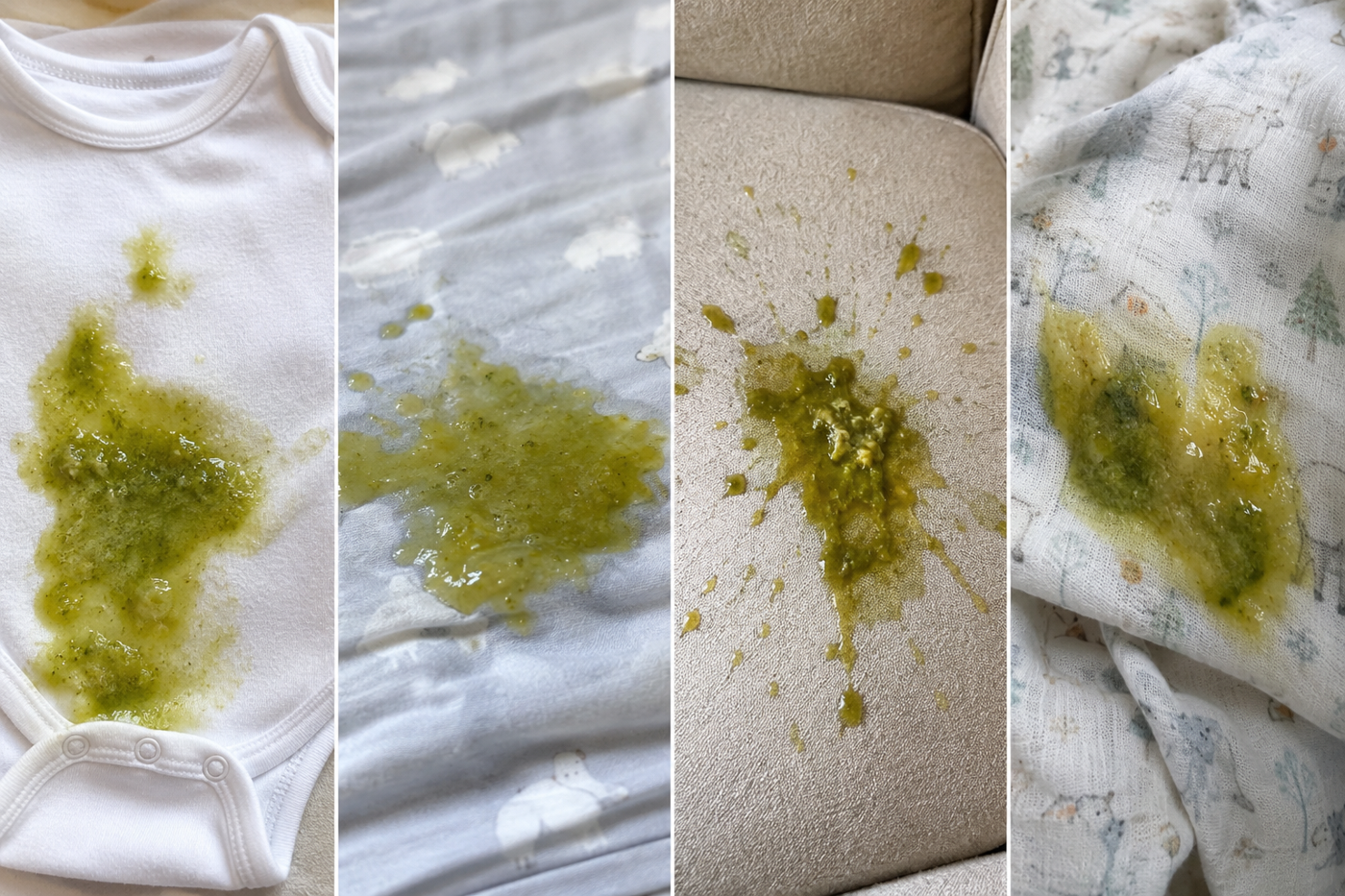
What Does Bilious Emesis (Green or Yellow-Green Vomiting) Look Like in a Baby?
- Vomit that is bright green, lime green, or yellow-green in color
- Green vomiting may appear alongside abdominal distension or bloating
- The baby or young child may seem uncomfortable, cry persistently, or have a hard or swollen belly
- The child may stop feeding or refuse to eat
- There may be no stool or reduced stool output in a newborn
- The child may appear pale, unwell, or more quiet than usual
Why Does Green Vomiting in a Baby or Newborn Matter?
- Bile is produced below the stomach — green vomit means material has traveled from below the stomach upward, which may indicate an obstruction further down the digestive tract
- In newborns especially, bilious vomiting may be associated with intestinal blockages that require urgent surgical evaluation
- This is a pattern that pediatric providers take seriously in the first days and weeks of life even if the baby looks well in the moment
This guide does not determine when it is safe to stay home.
When Should I Be Worried About My Baby Vomiting Green?
These are visual patterns that may deserve closer attention. This is for education only — not a diagnostic guide.
- Any green vomit in a newborn under 30 days old
- Green vomit alongside a swollen or hard abdomen
- No stool passage in the first 24–48 hours of life
- Repeated green vomiting in any age child
- A child who appears very unwell, pale, or lethargic alongside green vomiting
Green vomit in a newborn — regardless of how the baby looks in the moment — is among the changes many parents bring to immediate medical attention.
Knowledge Check
A 10-day-old newborn vomits and the parent notices the vomit is bright green. The baby had been feeding normally.
Why is green vomit in a newborn taken seriously even if the baby appears well?
Medical References
PediaPulse content is designed and authored by board-certified pediatricians (FAAP). All pages are educational in nature and do not constitute medical advice, diagnosis, or treatment. Always consult your child's physician.