Dehydration Signs
Quick Answer
Dehydration in children occurs when fluid output exceeds intake, often during illness involving fever, vomiting, diarrhea, or reduced feeding — and it can progress from mild to severe.
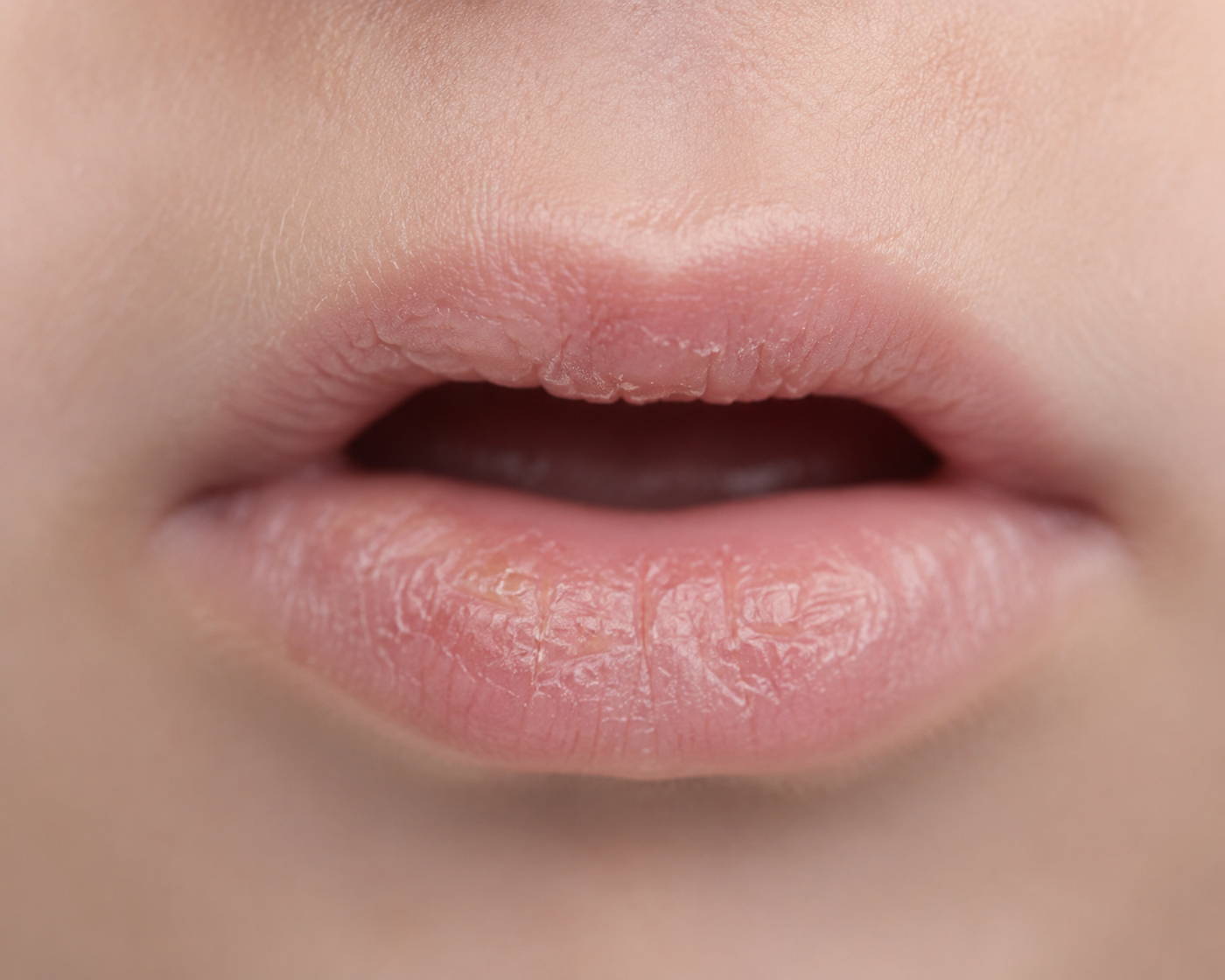
Dry lips — a sign of dehydration
What Are the Signs of Dehydration in a Baby or Toddler?
- Fewer wet diapers than usual — fewer than 4 in 24 hours is a yellow flag, none in 8 hours is more concerning
- A dry or sticky mouth and lips instead of the usual moist appearance
- No tears when crying, or fewer tears than normal
- Eyes that appear more sunken than usual
- In babies, the soft spot on top of the head (fontanelle) may appear sunken
- The child may seem more tired, fussy, or less active than usual
Why Does Dehydration in Babies and Toddlers Matter?
- Mild dehydration is common with illness and is often manageable at home with frequent small sips of oral rehydration solution
- Moderate to severe dehydration can affect how well the heart and brain receive blood flow, and young children can progress from mild to severe dehydration more quickly than adults
- The combination of no wet diapers, no tears, sunken eyes, and a child who seems very unwell or hard to rouse is the pattern that prompts urgent evaluation
This guide does not determine when it is safe to stay home.
When Should I Be Worried That My Baby or Toddler Is Dehydrated?
These are visual patterns that may deserve closer attention. This is for education only — not a diagnostic guide.
- No wet diaper or urination for 8 or more hours
- No tears at all when crying
- A sunken fontanelle in a baby (the soft spot appears lower than usual)
- Eyes that look sunken or have dark circles more pronounced than usual
- The child seems very difficult to wake, or appears very weak and limp
A child with no wet diaper for 8 or more hours, no tears, sunken eyes, or who appears limp and very difficult to rouse is showing signs many parents bring to urgent medical attention.
Knowledge Check
A 9-month-old with a stomach virus has had watery stools 6 times today and has not had a wet diaper in 7 hours. He is fussier than usual and his lips look dry.
What is the most reliable home indicator of dehydration in a baby?
Medical References
PediaPulse content is designed and authored by board-certified pediatricians (FAAP). All pages are educational in nature and do not constitute medical advice, diagnosis, or treatment. Always consult your child's physician.