Hives
Quick Answer
Hives are raised, red or skin-colored welts that appear suddenly on the skin, often causing intense itching — they occur when the body releases histamine in response to a trigger.
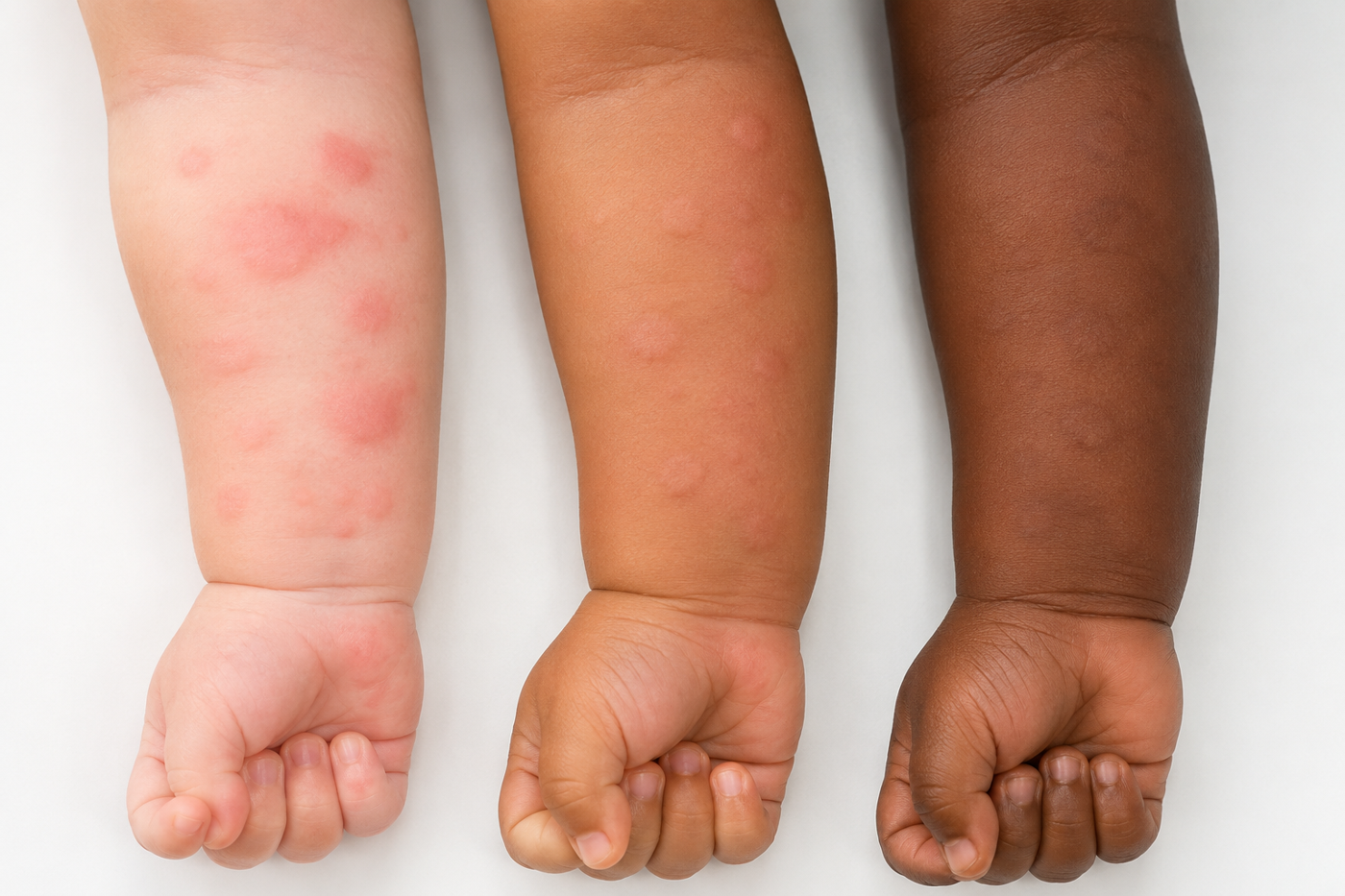
What Do Hives (Raised Red Welts on Skin) Look Like on a Child?
- Raised, red or pinkish welts of varying sizes that appear suddenly
- The welts may have a pale center with a red border
- Each individual welt typically fades within 24 hours, but new ones may appear in different locations
- The rash is usually intensely itchy
- Hives may appear anywhere on the body and may move around
- Common triggers include viral infections, certain foods, medications, or insect stings — though in many cases no trigger is identified
Why Do Hives or Raised Red Welts on My Baby's Skin Matter?
- Hives alone (urticaria) are typically uncomfortable but not dangerous in an otherwise well child
- Hives that appear alongside swelling of the lips, tongue, or face, breathing difficulty, or vomiting may be associated with a more serious allergic reaction called anaphylaxis
- The combination of what the rash looks like and how the child is behaving together determines whether prompt evaluation is appropriate
This guide does not determine when it is safe to stay home.
When Should I Be Worried About Hives or Raised Red Welts on My Child?
These are visual patterns that may deserve closer attention. This is for education only — not a diagnostic guide.
- Swelling of the lips, tongue, or face alongside hives
- Difficulty breathing, coughing, or throat tightness
- Vomiting, drooling, or difficulty swallowing alongside hives
- The child appearing pale, limp, or unusually quiet
- Hives that appeared immediately after taking a new medication or eating a new food
Hives accompanied by swelling of the face, lips, or tongue — or alongside breathing difficulty, vomiting, or a child who seems very unwell — are among the signs many parents bring to immediate medical attention.
Knowledge Check
A 3-year-old ate a new food at daycare and has hives on her torso and arms. She is itchy but otherwise acting like herself, with no swelling of her face or lips.
What additional symptom alongside hives raises the level of concern significantly?
Medical References
PediaPulse content is designed and authored by board-certified pediatricians (FAAP). All pages are educational in nature and do not constitute medical advice, diagnosis, or treatment. Always consult your child's physician.