Petechiae
Quick Answer
Petechiae are tiny pinpoint red or purple spots on the skin that do not fade when pressed — they occur when small blood vessels leak blood under the skin.
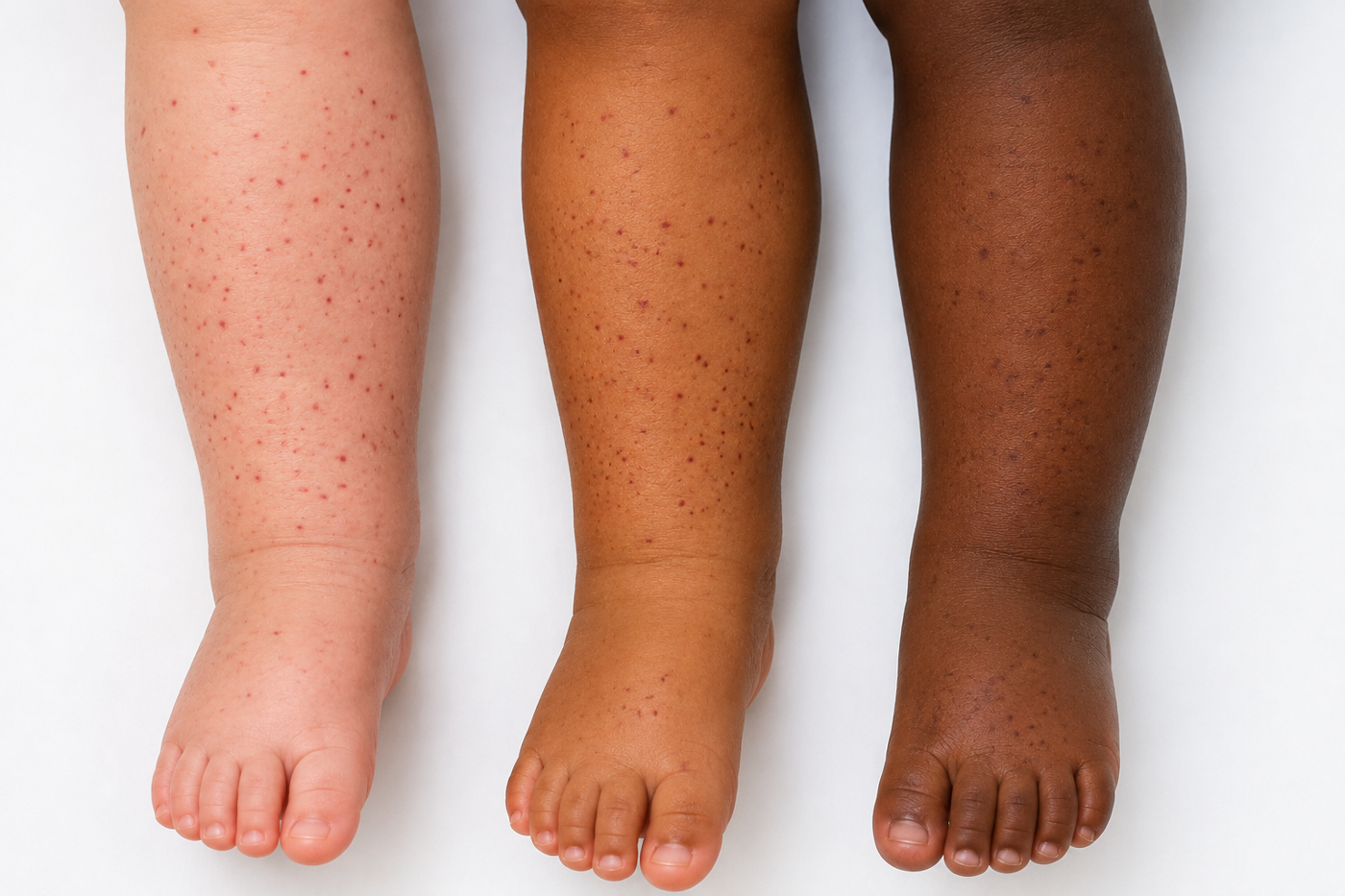
What Do Petechiae (Tiny Red or Purple Dots on Skin) Look Like?
- Tiny red, purple, or dark brown dots on the skin, typically 1–2 mm in size
- The spots do not turn white or fade when a glass is pressed firmly against them
- They may appear suddenly, anywhere on the body
- They do not itch, blister, or raise above the skin surface
- More spots may appear over minutes to hours
- The child may also have a fever, appear very unwell, or seem unusually quiet
Why Do Tiny Red or Purple Dots on Baby's Skin Matter?
- Non-blanching spots (spots that stay visible when pressed) may be associated with bleeding from small blood vessels under the skin
- While most causes of petechiae are benign, they can sometimes be associated with serious infections that require prompt evaluation
- The combination of petechiae with fever is the pattern that medical providers take most seriously
This guide does not determine when it is safe to stay home.
When Should I Be Worried About Red or Purple Dots on My Baby's Skin?
These are visual patterns that may deserve closer attention. This is for education only — not a diagnostic guide.
- Petechiae appearing together with fever
- New spots appearing rapidly over minutes
- Spots that are larger than 2–3 mm (these become purpura)
- A child who appears very unwell, is difficult to rouse, or has a stiff neck
- Cold or mottled hands and feet alongside the rash
Petechiae combined with fever — particularly spots that are spreading or a child who appears very unwell — are among the changes many parents bring to immediate medical attention.
Knowledge Check
A toddler has tiny red spots on her chest after a prolonged coughing fit. The spots do not fade when pressed.
What is the glass test used to determine about a rash?
Medical References
PediaPulse content is designed and authored by board-certified pediatricians (FAAP). All pages are educational in nature and do not constitute medical advice, diagnosis, or treatment. Always consult your child's physician.