Nasal Flaring
Quick Answer
Nasal flaring is a widening of the nostrils with each breath — a visible sign that a child may be working harder than usual to bring air in through the nose.
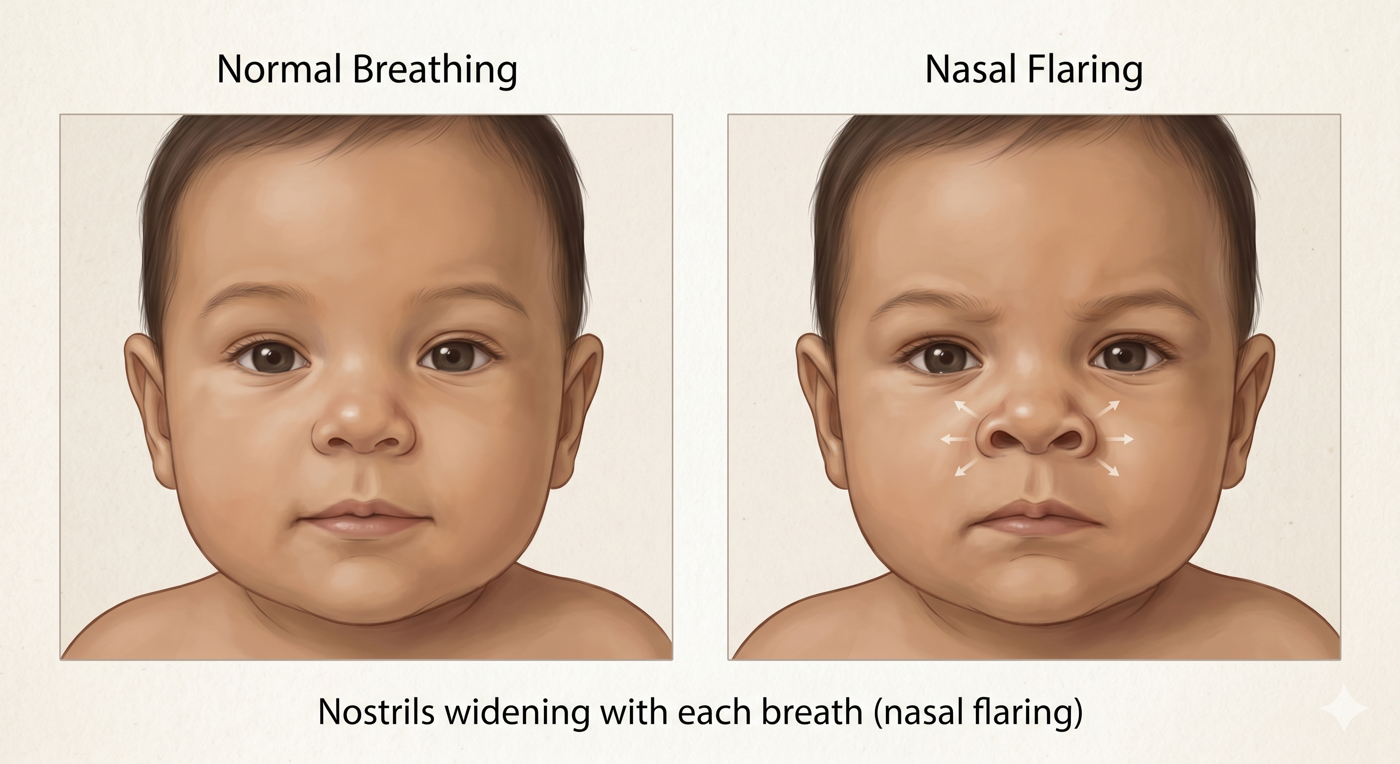
What Does Nasal Flaring (Baby's Nostrils Opening Wide) Look Like?
- The nostrils appear to widen and open with each breath in
- The sides of the nose seem to move outward rhythmically with breathing
- The child may also be breathing faster than usual
- Nasal flaring may appear alongside other breathing changes like retractions or grunting
- The child may seem less interested in feeding or may tire quickly during feeds
- Younger babies may appear restless or difficult to soothe
Why Does My Baby's Nose Flare When Breathing?
- Nasal flaring occurs when the body tries to widen the air passage to bring in more air with each breath
- Young babies and young children breathe primarily through their noses, so any extra effort to breathe may first appear as nasal flaring
- It is one of the signs medical providers use alongside retractions and breathing rate to assess the degree of breathing difficulty
This guide does not determine when it is safe to stay home.
Nasal Flaring Mapper
Tap the nostril you see opening wider when your baby breathes. Select both if both nostrils are flaring.
As you look at your baby
When Should I Be Worried About My Baby's Nostrils Flaring?
These are visual patterns that may deserve closer attention. This is for education only — not a diagnostic guide.
- Nasal flaring that appears even when the child is calm and not crying
- Flaring that occurs together with visible chest retractions
- Any bluish or pale color around the lips or face
- Grunting sounds with breathing
- The child becoming too tired to feed or losing interest in drinking
Nasal flaring in a calm, resting baby — especially when paired with fast breathing or other signs of breathing difficulty — is among the changes many parents bring to prompt medical attention.
Knowledge Check
A 3-week-old has had congestion for 2 days. Her mother notices the nostrils opening and closing more than usual with each breath.
Why do young infants primarily breathe through their nose?
A 5-month-old with a cold has nasal flaring during feeding. He is finishing about half his bottle before stopping.
Why might nasal flaring during feeding be a useful sign to watch?
Medical References
PediaPulse content is designed and authored by board-certified pediatricians (FAAP). All pages are educational in nature and do not constitute medical advice, diagnosis, or treatment. Always consult your child's physician.