Cyanosis (Blue Lips)
Quick Answer
Cyanosis refers to a bluish or purplish discoloration of the skin or lips, most visible around the mouth, and it occurs when there is less oxygen-carrying capacity in the blood reaching the skin.
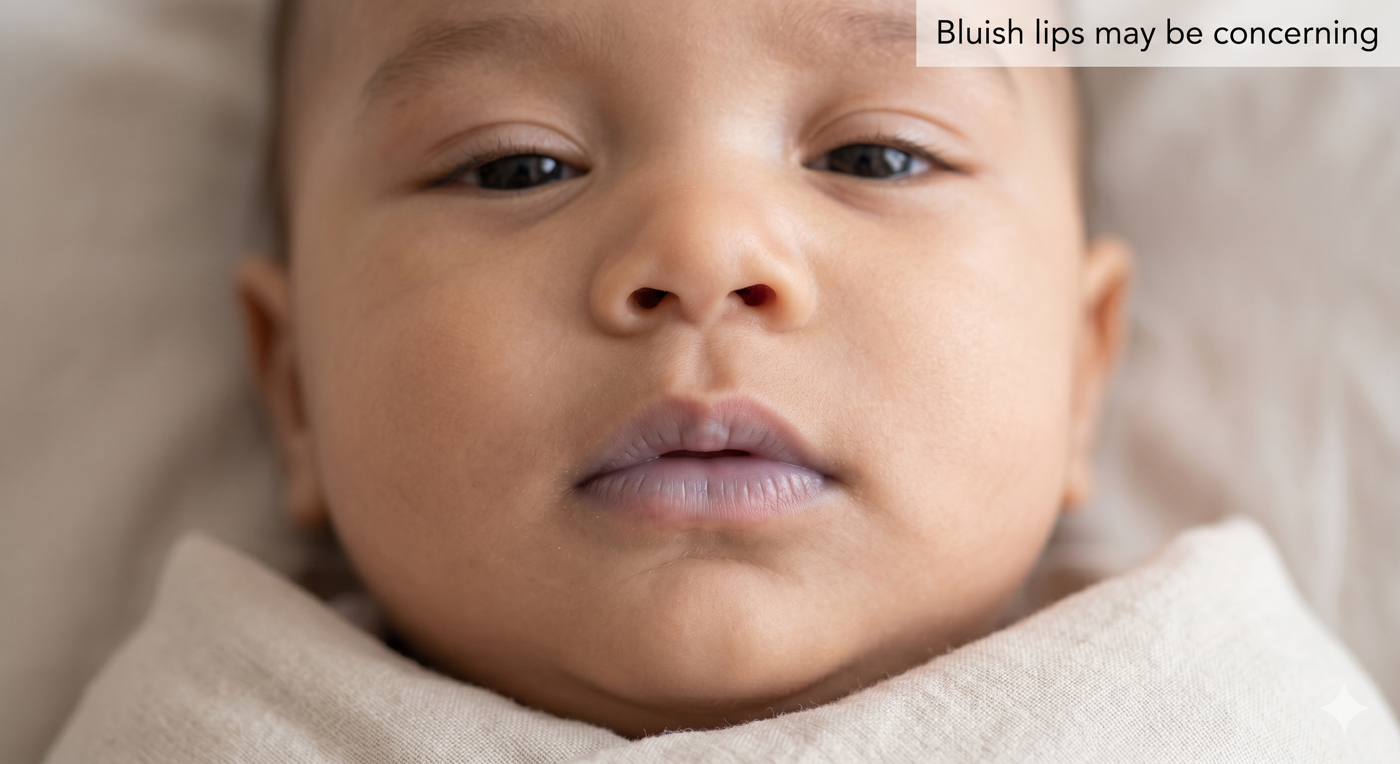
What Does Cyanosis (Blue Lips or Fingertips) Look Like in a Baby?
- A bluish, grayish, or purplish tint around the lips or inside the mouth
- The color may be easier to see in natural or bright indoor light
- The hands and feet may also appear bluish, particularly in newborns — this is called acrocyanosis
- The child may seem unusually quiet, limp, or difficult to arouse
- In darker-skinned children, cyanosis may be most visible on the gums, inside the lips, or around the eyes
- The color change may come and go or may be persistently present
Why Does Blue Coloring Around the Lips Matter?
- Central cyanosis — blue color around the lips or inside the mouth — may be associated with reduced oxygen levels in the blood and is taken seriously by medical providers
- Peripheral cyanosis — blue hands and feet in a newborn in a cool environment — is very common and typically harmless, but the distinction matters
- A color change around the lips or face that concerns a parent is always worth discussing with a medical professional
This guide does not determine when it is safe to stay home.
Cyanosis Color Mapper
Tap the areas where you notice a bluish, purplish, or pale color that is not normal for your baby. You can select more than one.
When Should I Be Worried About My Baby's Lips or Fingers Turning Blue?
These are visual patterns that may deserve closer attention. This is for education only — not a diagnostic guide.
- Any blue or gray color around the lips or inside the mouth
- Blue color that does not improve after the baby is warmed up
- A child who seems limp, unusually quiet, or difficult to wake alongside any color change
- Blue color that appears during or after feeding
- Any episode of a child turning blue and then recovering
A bluish color around the lips or inside the mouth — especially in a child who seems unwell, limp, or is having breathing difficulty — is among the signs that medical providers consider reason for prompt evaluation.
Knowledge Check
A 2-day-old newborn has blue-tinted hands and feet but pink lips and a normal pink color around the mouth.
What is the most important distinction between types of cyanosis in newborns?
A 4-month-old has a heart condition. During a feeding his lips appear to turn a grayish-blue color for about 30 seconds and then improve.
What makes identifying cyanosis in darker-skinned children different?
Medical References
PediaPulse content is designed and authored by board-certified pediatricians (FAAP). All pages are educational in nature and do not constitute medical advice, diagnosis, or treatment. Always consult your child's physician.