Mottled Skin
Quick Answer
Mottled skin is a blotchy, irregular pattern of lighter and darker areas — often described as lace-like or marbled — that can appear when blood flow through the skin is uneven.
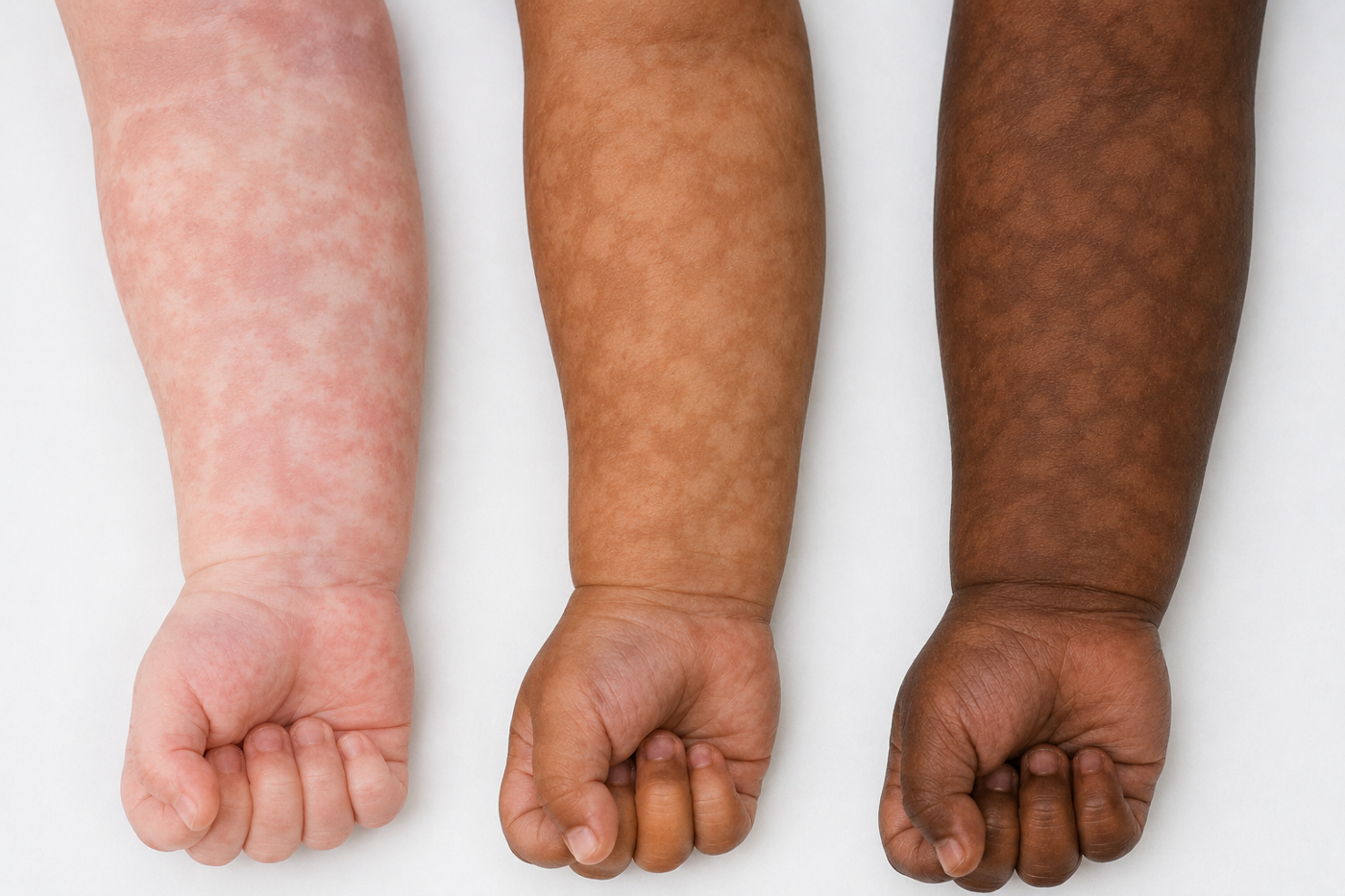
What Does Mottled or Blotchy Skin Look Like in a Baby?
- A blotchy, marbled pattern of pinkish-red and pale or white patches on the skin
- The pattern may appear on the trunk, legs, or arms
- The skin may feel cool to the touch in the mottled areas
- The pattern may appear and then fade as the baby warms up
- The child may also seem very tired, feed poorly, or appear unwell
- Mottling may be more visible in a room-temperature or cool environment
Why Does Mottled or Marbled Skin in Babies Matter?
- In newborns and very young babies, transient mottling is common when they are cold and often resolves with warming
- Persistent or worsening mottling in a child who appears unwell may be associated with changes in circulation and is taken seriously by providers
- Mottling alongside other signs — such as fever, poor feeding, unusual quietness, or cold extremities — is a pattern that prompts medical attention
This guide does not determine when it is safe to stay home.
When Should I Be Worried About My Baby's Skin Looking Blotchy or Marbled?
These are visual patterns that may deserve closer attention. This is for education only — not a diagnostic guide.
- Mottling that persists after the baby is warmed
- Mottling that appears alongside fever, unusual quietness, or poor feeding
- Cold, blotchy extremities in a baby who also seems very unwell
- Mottling that appears to worsen over time
- Any mottling in a newborn that does not resolve with warmth and stimulation
Mottled skin that persists, worsens, or appears alongside a child who seems very unwell — especially with fever, unusual quietness, or cold extremities — is among the signs many parents bring to prompt medical attention.
Knowledge Check
A 3-week-old is undressed for a bath in a slightly cool room. The parent notices a marbled pattern on her legs and belly. After warming her up, the pattern fades.
What is the key difference between mottling that is a concern and mottling that is benign?
Medical References
PediaPulse content is designed and authored by board-certified pediatricians (FAAP). All pages are educational in nature and do not constitute medical advice, diagnosis, or treatment. Always consult your child's physician.